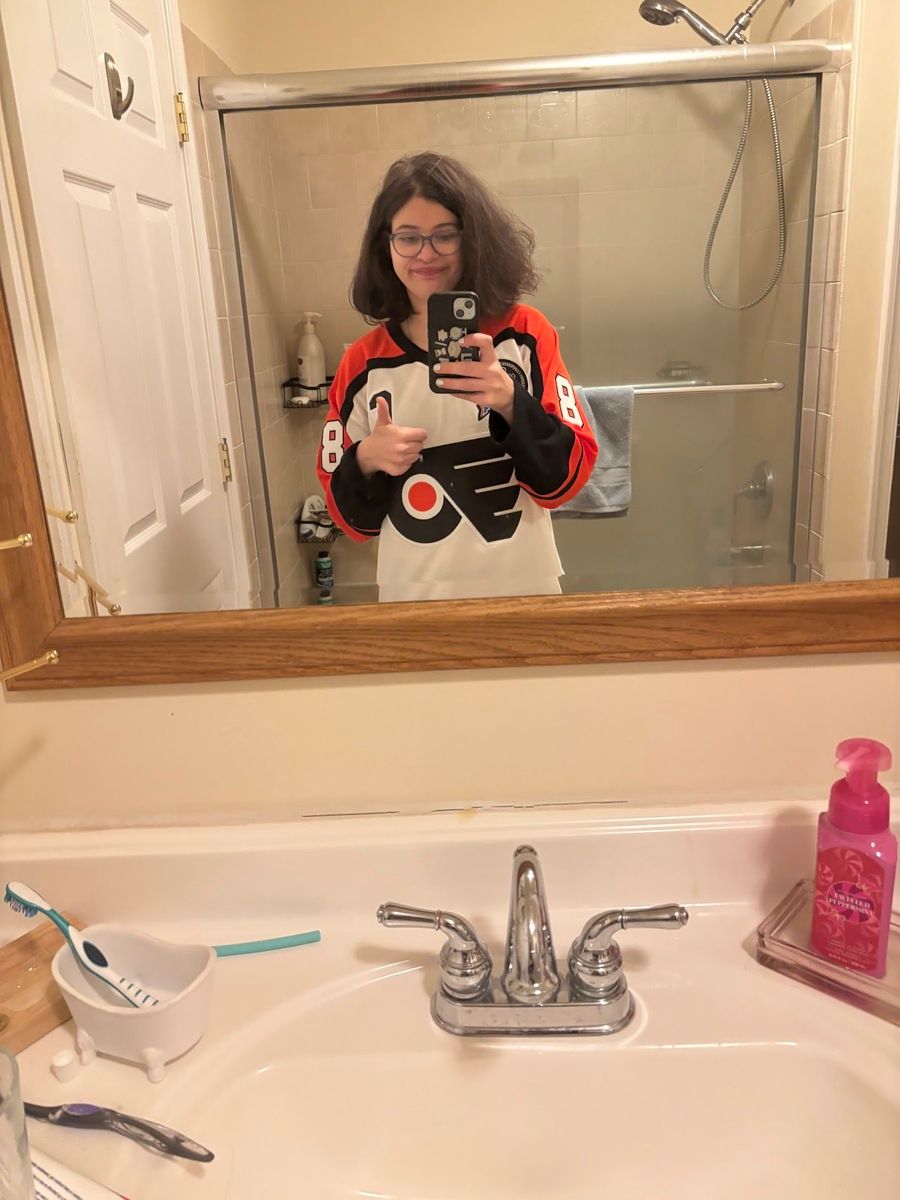
I work at my undergraduate institution’s library, as many of you know. You may also know that I will not shut up about my library job, whether it is to talk about the books patrons have returned, books I’ve shelved, or just how much fun it is to work at a local library. But what I will say as a bit of an aside is that my library job has shaped me, just as much as I have shaped it1.
One such example of my library job shaping me came from shelving Rainbow Alliance/The Women’s Center books into the stacks (or shelves) from its space on the first floor. My school’s pleasure reading section, known as Quita’s Corner, needed extra space to store its books. It is amazing that more patrons requested pleasure reading books and that the library had the resources to buy all those books. What was also amazing was seeing these books. The Rainbow Alliance/Women’s Center2 was a feminist and later LGBTQ affinity group that used to be on my campus. I am sure they held events and other things that clubs do, such as Zami, an organization for LGBTQ and BIPOC students on my school’s campus3. But what I know for certain is that they were able to get the library to buy books about feminism, gay history (and a lot about the AIDS crisis) and queer theory.
My routine shelving is as follows: get to the desk, put on my big sensory headphones, queue up some banger tunes, grab shelving tags (this was until nearly the end of this academic year when I have put off shelving tags and can shelve anywhere in the library), look for which cart has the most books that need to be shelved, and go do the thing.
I mention the limitation because I could only shelve on three out of the five floors, which meant I did a lot of shelving on the second, third, and A (basically below the first floor). Many of the books from the Rainbow Alliance/Women’s Center had call numbers that would put them on those floors. So I spent a lot of time with these books.

Some of these books were primary sources, or what would be for us fifty to thirty years away from these events. There were histories of NOW (National Organization of Women), the devastation of AIDS to the queer community, and Susan Stryker’s first edition of Transgender History. There were poetry collections from small presses that I had no idea existed. There were anthologies on classism in the lesbian community, called, quite cleverly, Coming Out of the Class Closet, and even a book with listings on lesbian separatist communities. Some books I chose to check out by putting them back on the cart, but I took pictures of them and added them to my list of books to check out.
Despite my knowledge of a lot of books and cool book recommendations, I had no idea that any of these books existed. This may very much be because of their obscurity om, but also because of their “taboo” subjects. My school is already known as a haven for lesbians and other queer folks, but other places are not.
As someone who wants to be a librarian in their post-graduate career (and get a Master in Library Science to do so immediately after I graduate,4 I would not be remiss to mention the book-banning wave that has swept this country, of which many are written by LGBTQ authors.
Books like Maia Kobabe’s Gender Queer, a memoir of eir genderfluidity, and All Boys Aren’t Blue by George M. Johnson grace the top of the ALA’s list of challenged books. Queer books are important in showing youth and adults that queerness is not deviant, and that this knowledge existed and will continue to exist. The suppression of this knowledge is just part of a wider trend against queer people. I will just mention here that Micah Rajumov’s edited volume Nonbinary: Memoirs of Gender Identity helped me come out as nonbinary because of the variety of knowledge about it. I hope that by sharing this, I can show my subscribers, followers, and anyone else who gets this post that libraries helped me learn more about the LGBTQ community. I hope to have positions where I can directly affect the knowledge people have about marginalized groups and historical events.
Oh and if you want to see more about my spring break internship where I got to do just that, directly affect collections development, here you go!
Thank you for reading Not Another Newsletter. This post is public so feel free to share it. Tell your friends/profs/khaverim/comrades.